01 / A place I would open every day
Loomnote began with my own writing, note-taking and personal data privacy needs. Not every thought deserves a new folder, a title and a knowledge system before it can be saved. Often, I just want to capture it.
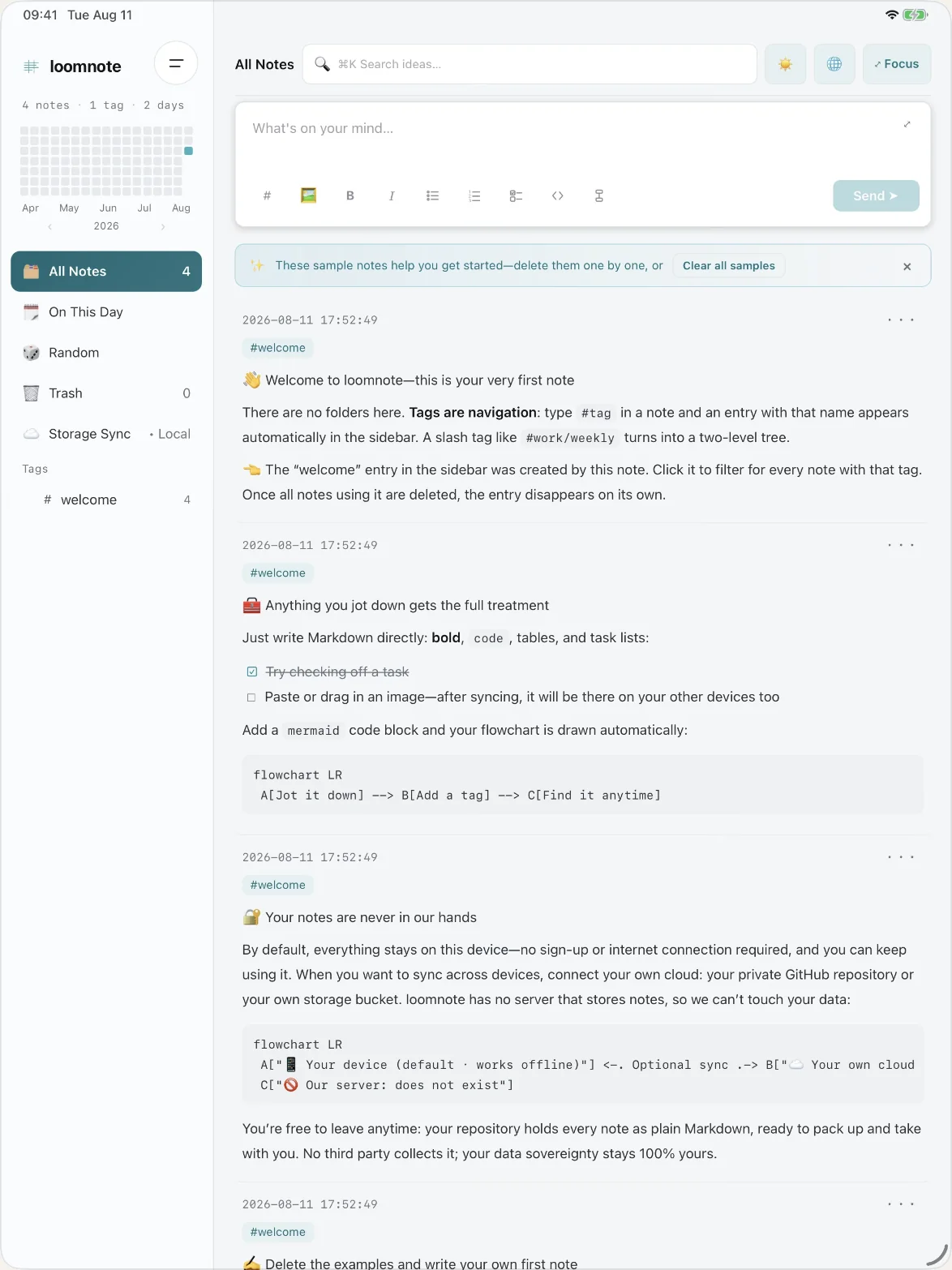
02 / Let organization follow writing
Persistent input reduces the steps before writing. Tags and a tag tree let structure emerge over time. Markdown keeps the content readable and reduces dependence on a particular editor when moving it later.
From writing a note to taking it with you
Everyday editing and offline use
Optionally your own GitHub repo or S3-compatible bucket
Markdown files to export and keep using
A data ownership overview: Loomnote does not host note bodies. Sync still requires trust in the chosen storage service; local caching is not an encrypted vault. Sync capabilities vary by platform and version.
03 / Owning data comes with choices
A local working copy and storage I choose mean note bodies do not need a Loomnote-hosted database. Sync authorization, device management and backups do not disappear. The promise is clear ownership and portability, rather than trusting nothing.
04 / Bring the writing habit to a phone
From the Web to iPhone and iPad, the aim is to let writing follow daily life. The iOS app is on the App Store, including China mainland; a desktop app is still in development. Capabilities and sync options need to be described per platform.