01 / The page says more than the chat can hold
I began using HTML prototypes more often to describe requirements. Layout, hierarchy and interaction intent became directly visible. Yet feedback stayed scattered across chat. “Change this part” quickly loses its meaning without the page and location.
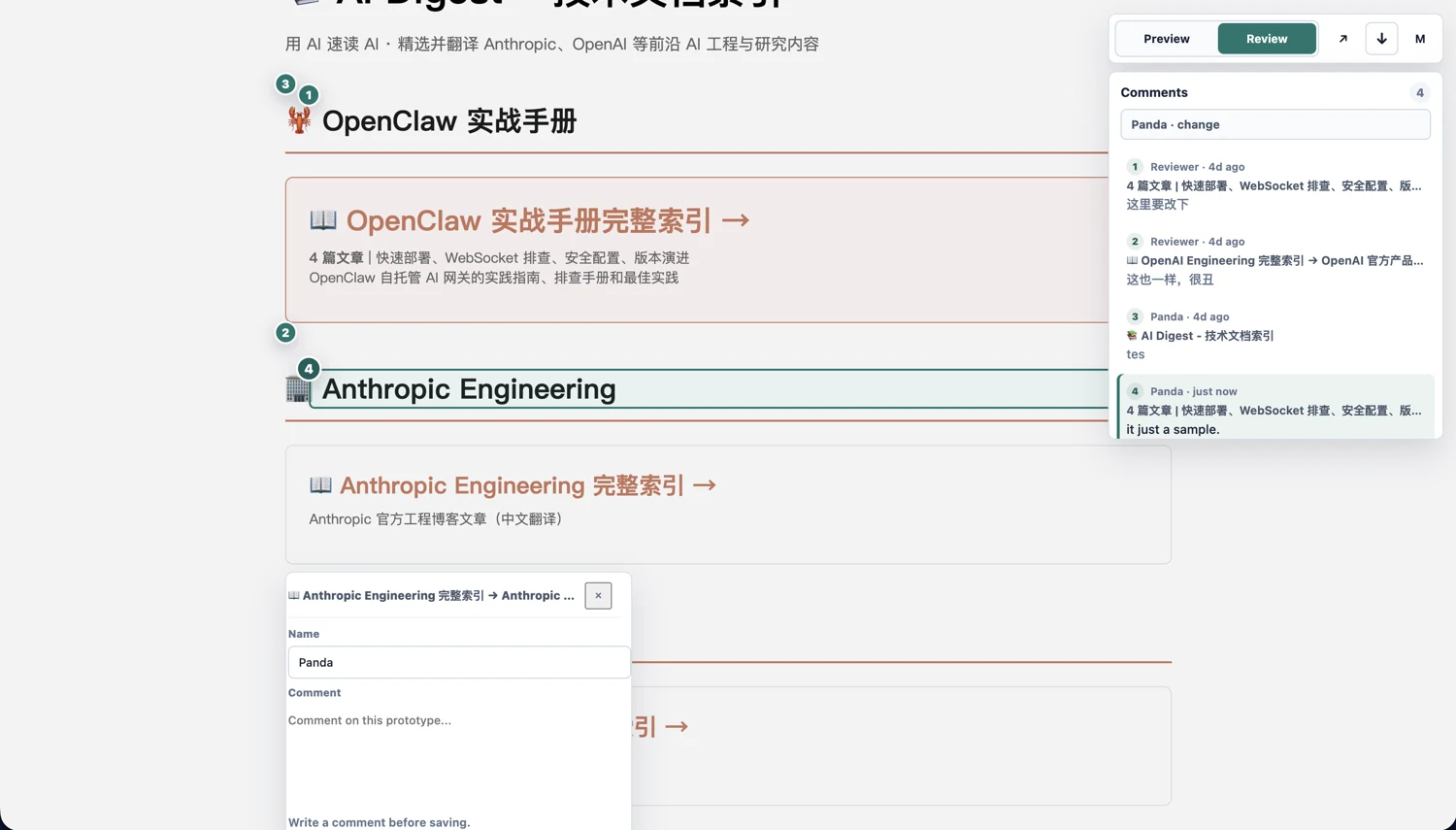
02 / Attach feedback to the actual content
ProtoLens turns static files in GitHub into stable review links. Reviewers anchor comments to a region or text so the next person can locate the issue without guessing from an isolated screenshot.
Keep feedback attached to the next revision
Make the requirement browsable
Comment on exact text or regions
Give people or agents actionable context
Check the revised prototype
A workflow overview, not a claim that agents automatically implement or accept every comment.
03 / Carry human judgment into the next AI pass
Collecting comments is only one part. Markdown export and MCP access give the person or agent making changes the feedback they need. Human judgment enters the next pass; the revised prototype still needs review.
The trade-off: focus on static review
HTML, SVG and PNG cover the main inputs in this workflow. ProtoLens does not execute arbitrary builds, install dependencies or run application backends. Some fully interactive behavior therefore needs verification in the product’s own environment.